
Our Approach
Communication failures erode trust between patients and surgeons, lead to interpersonal conflict, and sometimes non-beneficial surgery. FCS provides essential, high-impact communication skills for surgical residents, preparing them to support the needs of surgical patients.
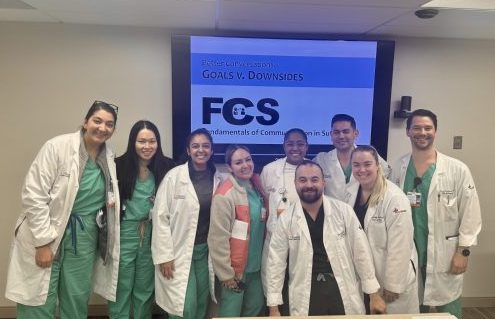
Surgical trainees have little or no formal communication training
The fact is that learning basic informed consent and shared decision making in medical school does not prepare surgeons for the challenge of including patients’ priorities in high stakes, emotionally charged, time-sensitive decisions. Innovative evidence-based communication interventions exist, but most surgical trainees have little access to advanced communication skills.
“Why didn’t you teach us this last year?”
– Resident participating in FCS Year 1, 2024
FCS is a scalable, skills-based curriculum
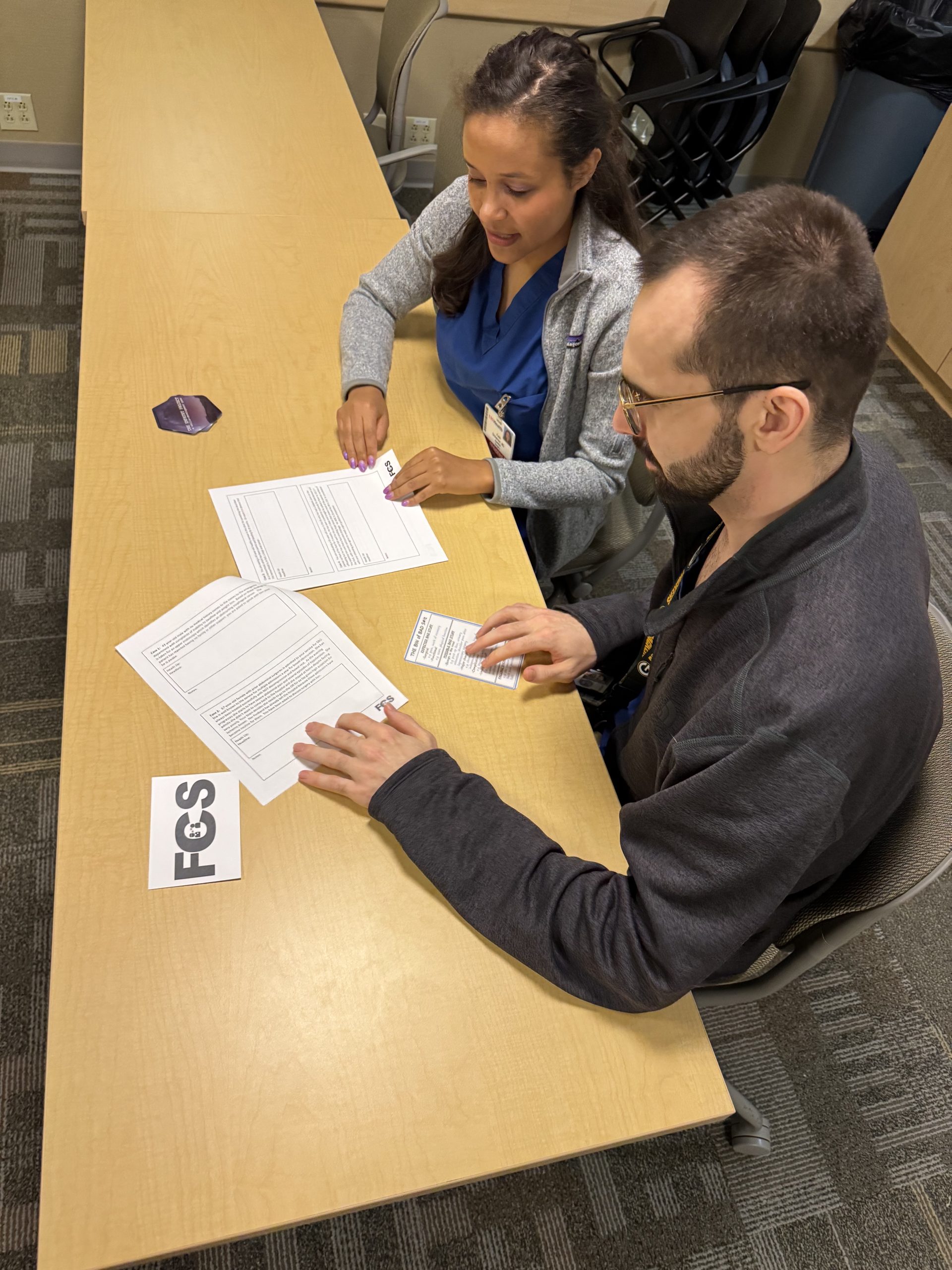
Like dissection or suturing technique, communication with patients is a skill requiring performance, feedback, and repetition
We developed this curriculum to train essential, high-impact, communication skills in a manner that is pedagogically innovative while maintaining high potential for scalability. Our training uses principles of adult education, minimizing didactics and focusing on drills and targeted practice with feedback.
Our long-term goals are to:
- Ensure all surgical trainees have access to high-impact communication skills
- Support surgeons as they navigate care with patients and families
- Help patients and families make decisions about surgery that are right for them
FCS is based on Three Core Skills
Attending to Emotion
The ability to recognize and respond to emotion is a critical communication skill. Learning to attend to emotion gives patients and families space for their emotional response, allowing them to consider what is right for them. FCS teaches trainees to attend to emotion through engaging, peer-to-peer activities with feedback including:

The Two-Minute Rant
Learners use improv to generate understanding of shared values that underlie expressions of frustration.

Avoiding the Cognitive Trap
Trainees learn to identify a “cognitive trap” and attend to underlying emotions before moving on.
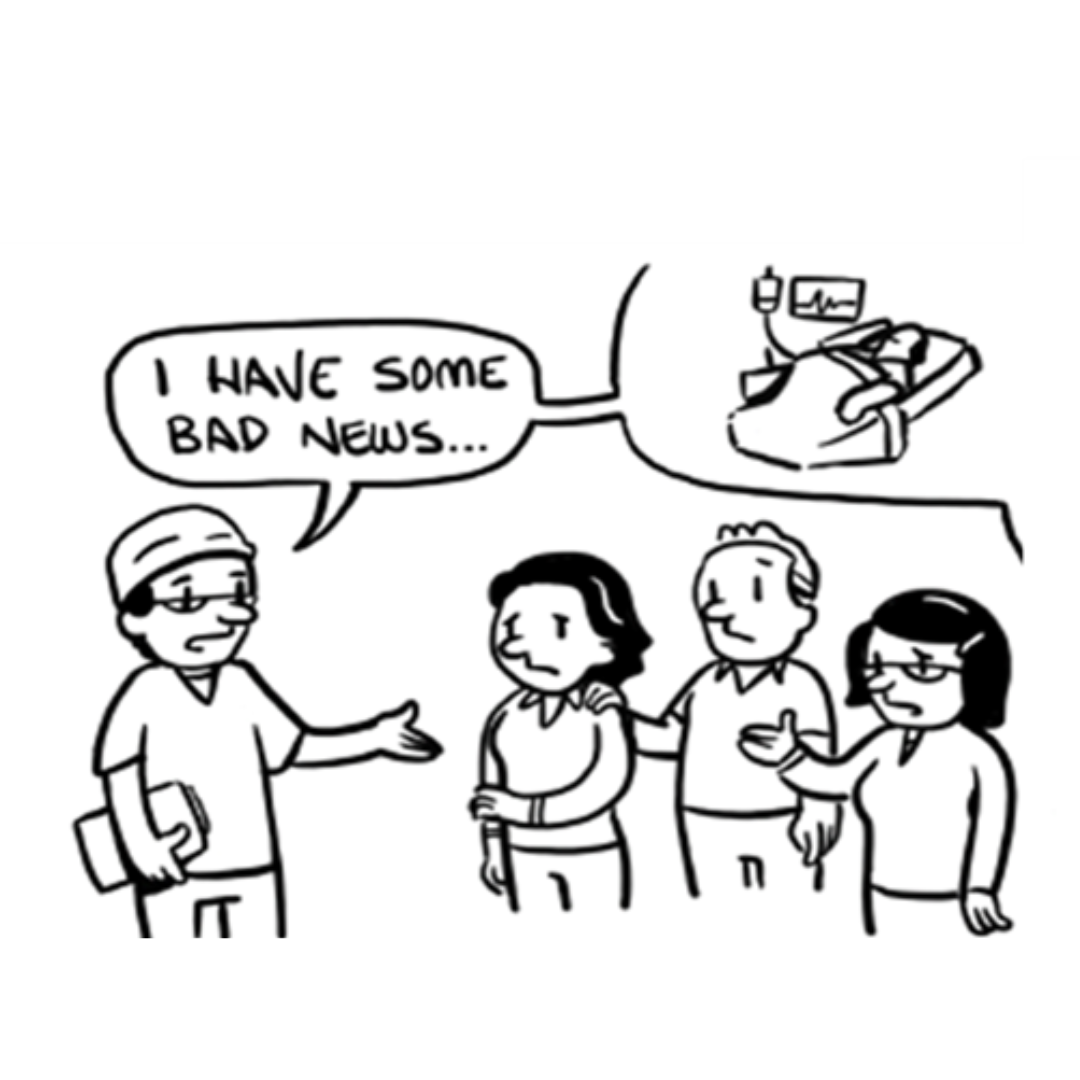
Heads Up & Headline
Participants practice delivering news with a “Heads Up” alert and a “Headline” summary of the situation and its consequences.
Supporting Deliberation
Surgeons were historically trained to discuss surgery using a complicated technical description and a simplified narrative that surgery will fix the patient’s problem. This can lead patients to attach their own, often implausible, goals to surgery. Further, surgeons routinely miss important information about the downsides of surgery beyond standard risks. Clarifying the goals and downsides of surgery supports patients and families in deliberation about whether surgery is right for them.
Better Conversations for Better Informed Consent
Better Conversations is a framework to improve discussions about surgery with patients. In this video, we explain how Better Conversations shifts the paradigm for informed consent.
Managing Uncertainty
Serious illness poses challenges in communicating complicated prognoses and outcomes, which are frustrating for both patients and surgeons. Scenario planning allows surgeons to tell a story about what might happen if things go well, and another to describe what it means if things go poorly. Rather than listing probabilistic outcomes and isolated risks, scenario planning allows patients and families to imagine and prepare for how they might experience the treatments and outcomes.
Best Case/Worst Case
Best Case/Worst Case is a communication framework that uses a graphic aid and scenario planning to help surgeons support patients and their families through difficult surgical decisions. This whiteboard video demonstrates the use of Best Case/Worst Case for a patient with an acute surgical problem.
Learn More: Better Conversations for Better Informed Consent