
The Curriculum
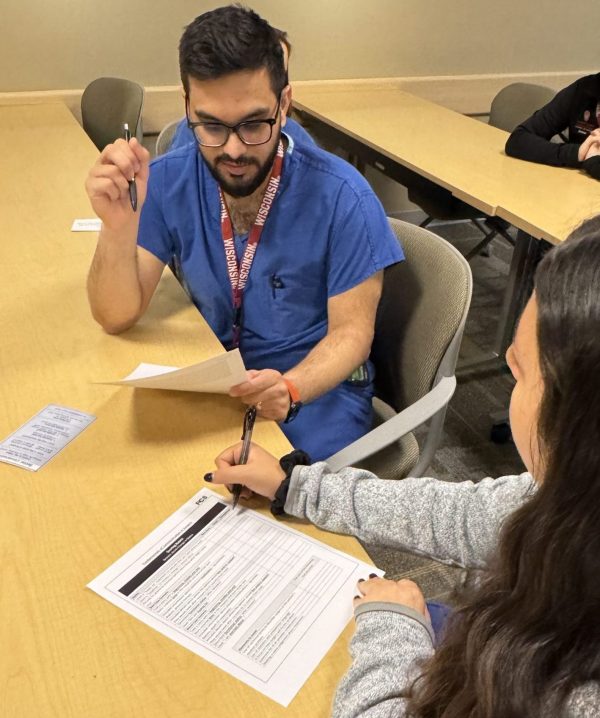
The FCS curriculum builds skills through targeted drills with feedback to prepare surgeons to engage patients and families in care decisions.
FCS is a scalable, skills-based curriculum
FCS is delivered through one two-hour session each year over the five years of a surgical residency. While the skills are repeated each year, the clinical context progresses in difficulty, building skills in parallel with the trainee’s maturity.
“This has completely changed how I get consent. This has completely changed how I think about surgery.”
– PGY1 resident, UW-Madison, 2024
We have delivered the FCS curriculum to residency programs across the country. These residents learned novel communication frameworks that helped them navigate difficult conversations and routine moments in surgical care.
How the Curriculum Works
FCS operates on a Train-the-Trainer model. Trainers learn the components of FCS and apply these skills in their own practice as they prepare to lead sessions with their trainees.
We provide trainers with all materials needed to carry out each session. This includes pre-recorded didactics, trainer and learner guides, worksheets, answer keys, scoring rubrics, card games, and administrative resources. To learn more, watch this overview video, scroll down to read our curriculum overview, and sign up to receive updates and connect with the FCS team!
FCS is organized into two sessions that alternate and build over the 5 years of training
Each session starts with an Attending to Emotion activity and is followed with skills for communicating about care, which build in difficulty as learners progress through the curriculum.
Session A
Session B
Year 1
Residents practice attending to emotion through the 2-Minute Rant, an improv activity with their peers to generate understanding of shared values and learn to identify and Avoid the Cognitive Trap.
Then learn and apply the steps of Better Conversations in situations where typically we do surgery.
Year 2
Residents practice delivering serious news with Heads Up and Headline statements. Then they learn and practice Scenario Planning to help patients and their families navigate an acute change in status.
Year 3
Residents warm up with the 2 Minute Rant and Avoid the Cognitive Trap. Then return to Better Conversations to consider cases where there are 2 Reasonable Choices.
Year 4
Residents warm up with Heads Up and Headline and return to Scenario Planning learning and practicing the Best Case/Worst Case framework for treatment decisions with high uncertainty.
Year 5
Residents warm up with the 2 Minute Rant and Avoid the Cognitive Trap. Then return to Better Conversations to consider cases where Surgery May do More Harm than Good.
Learn More: Best Case/Worst Case
Best Case/Worst Case is a framework to help surgeons talk to patients and their families about high stakes care decisions. In this video, we explain how Best Case/Worst Case can support surgeons and patients in the deliberation process.